If you are thinking about remodeling a home in Laguna Beach, coastal rules can shape your timeline, budget, and even what gets approved. That can feel frustrating at first, especially when a project looks like a straightforward upgrade on paper. The good news is that with the right due diligence, you can spot the biggest permitting issues early and plan with more confidence. Let’s dive in.
Why coastal rules matter in Laguna Beach
Laguna Beach sits within a highly regulated coastal environment, and that matters long before construction begins. According to the City of Laguna Beach’s Local Coastal Program overview, almost all of the city is in the coastal zone except the Sycamore Hills area east of Laguna Canyon Road and north of El Toro Road.
For most properties, the city has authority to review Coastal Development Permits under its certified Local Coastal Program. However, Blue Lagoon, Irvine Cove, and Three Arch Bay remain under California Coastal Commission jurisdiction, which can change the review path for a remodel. That is one reason coastal due diligence is so important when you are evaluating a property or planning work.
Understand the Coastal Development Permit
One of the most common misconceptions is that a remodel only needs a building permit. In the coastal zone, that is not always the case. The California Coastal Commission explains that development is defined broadly, and a Coastal Development Permit, or CDP, is separate from standard building permits.
In practice, that means a project may need coastal review even if it seems like a normal renovation. Changes to a structure’s footprint, grading, access, or intensity of use can all bring coastal permitting into the picture. For buyers and owners, the key takeaway is simple: do not assume a remodel is minor just because it is not a ground-up build.
What pushes a remodel into harder review
Some Laguna Beach projects move through a lighter review process, while others trigger more formal scrutiny. The city’s major remodel guidance and project review matrix draw an important line around scale.
A project can be treated as a major remodel if it expands an existing structure by 50% or more, or if 50% or more of the existing structure is demolished, removed, replaced, or reconstructed. The same city guidance shows that additions over 50%, major remodels, and new single-family homes usually require public hearing review, while some smaller additions under 10% can be ministerial.
That distinction matters because public-hearing projects typically involve more process, more notice requirements, and more time. If you are buying with renovation plans in mind, this threshold is one of the first issues to clarify.
Bluff-top and oceanfront homes face added scrutiny
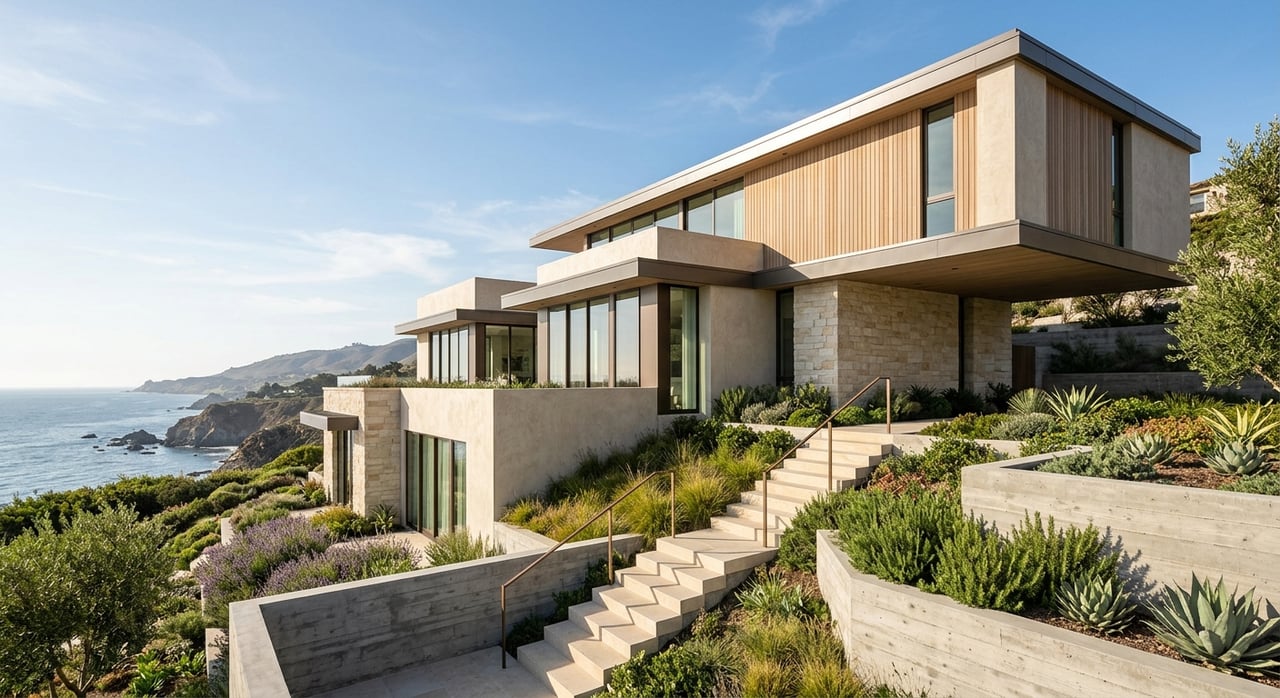
For oceanfront or bluff properties, the review process can become much more technical. Laguna Beach requires a coastal hazards study and bluff-edge determination for new development, major remodels, and additions on those lots.
That analysis must account for long-term bluff erosion, 75-year sea-level-rise scenarios, and a 100-year storm or wave event. The city also requires a geotechnical study for vacant and oceanfront sites, and it retains outside consultants to review submitted reports.
The city’s bluff-edge guidance adds another important point: the bluff edge can migrate landward over time. Reports must show that a project will remain safe over its economic life and will not depend on protective devices that materially alter natural landforms.
What the review process usually looks like
Laguna Beach accepts planning applications through its city planning portal and department process. After submission, city staff should identify whether an application is complete within 30 days.
If a project requires a public hearing, the applicant must provide notice at least 30 calendar days beforehand and arrange mailing to nearby owners and tenants. Those notice and hearing steps add time, even before you factor in possible revisions or outside consultant review.
For that reason, a bluff-top or shoreline remodel is usually a multi-month process rather than a simple building-permit track. While Laguna Beach does not publish a standard average timeline in the cited materials, the required studies, notice periods, consultant review, and potential revisions make that outcome a practical expectation.
Appeals can extend the timeline
Even after local action, some projects may still be appealable. The California Coastal Commission notes that for appealable local CDP actions, the final local action notice must be complete before the appeal clock starts.
This does not mean every project will be appealed. It does mean that buyers, sellers, and owners should understand that approval is not always the final step in the coastal process. When you are planning around a renovation, timing assumptions should be conservative.
What buyers should ask before closing
If you are buying in Laguna Beach with plans to remodel, your due diligence should go beyond finishes and floor plans. Coastal entitlement risk can affect your budget, schedule, and the feasibility of your design.
Start with a few practical questions:
- Is the property in the coastal zone?
- Is it in an appealable area or one of the neighborhoods under direct Coastal Commission jurisdiction, such as Blue Lagoon, Irvine Cove, or Three Arch Bay?
- Does the planned scope cross the city’s major-remodel threshold?
- Will bluff, geotechnical, or other site-specific studies likely be required?
- Should you budget for entitlement time and consultant costs in addition to construction costs?
These are not small details. They can shape whether a home is a straightforward cosmetic update or a more complex coastal entitlement project.
What sellers should know before listing
If you own a Laguna Beach property with remodeling potential, unresolved permitting issues can affect how buyers underwrite the opportunity. As a practical market takeaway, buyers often account for consultant costs, redesign risk, delays, and the possibility that plans may be conditioned or appealed.
On the other hand, a property with approvals in hand or a clearly supportable build concept is often easier for buyers to value. It can also make your marketing more precise because the next owner has a clearer view of what is possible.
For sellers in the luxury coastal market, that planning clarity can support stronger positioning. It helps reduce uncertainty, and uncertainty is often where leverage gets lost.
How coastal rules affect pricing strategy
In high-value coastal markets, pricing is not just about location and architecture. It is also about friction. If a buyer expects a long entitlement path before improving the property, that can influence how aggressively they bid.
That does not mean every property with permitting complexity is less desirable. It means the market usually distinguishes between homes with clear remodel pathways and homes with unanswered entitlement questions. In a place like Laguna Beach, those details can become part of the value conversation.
A smarter way to plan a remodel
If your goal is to remodel, start by defining the likely approval path before you finalize expectations. Confirm whether the home is in the coastal zone, whether local or Commission jurisdiction applies, and whether the scope may trigger major-remodel treatment.
If the property is oceanfront or on a bluff, expect added technical review and plan accordingly. Build your schedule and budget around the full process, including studies, consultant review, notice periods, and the possibility of revisions. That approach can save time, money, and frustration later.
In Laguna Beach, remodeling success often starts with realism. When you understand the coastal framework early, you can make sharper decisions whether you are buying, holding, improving, or preparing to sell.
For buyers and sellers navigating high-value coastal property decisions, strategic guidance matters. Daftarian Group advises clients across coastal Orange County with a discreet, highly tailored approach grounded in local market knowledge. If you are evaluating a Laguna Beach property with remodel potential, a private consultation can help you assess the opportunity with greater clarity.
FAQs
Do remodels in Laguna Beach always need a Coastal Development Permit?
- No. But in the coastal zone, a remodel may require a Coastal Development Permit even if it also needs standard building permits, especially when it changes footprint, grading, access, or use intensity.
What counts as a major remodel in Laguna Beach?
- Laguna Beach may treat a project as a major remodel if it expands the existing structure by 50% or more, or if 50% or more of the structure is demolished, removed, replaced, or reconstructed.
Which Laguna Beach areas stay under Coastal Commission jurisdiction?
- According to the city’s Local Coastal Program overview, Blue Lagoon, Irvine Cove, and Three Arch Bay remain under California Coastal Commission jurisdiction.
Do oceanfront Laguna Beach remodels need extra reports?
- Yes. For oceanfront or bluff lots, the city requires a coastal hazards study and bluff-edge determination for new development, major remodels, and additions, and it also requires a geotechnical study for vacant and oceanfront sites.
How long does the Laguna Beach coastal review process take?
- The city states staff should identify application completeness within 30 days, and public-hearing projects require at least 30 calendar days’ notice before the hearing. Because consultant review, revisions, and possible appeals may also apply, many bluff-top or shoreline remodels function as multi-month processes.
Why do coastal permitting issues matter when buying a Laguna Beach home?
- Coastal permitting issues matter because they can affect renovation cost, design feasibility, timing, and resale strategy. Buyers should evaluate entitlement time, consultant costs, and site-specific study requirements alongside the construction budget.