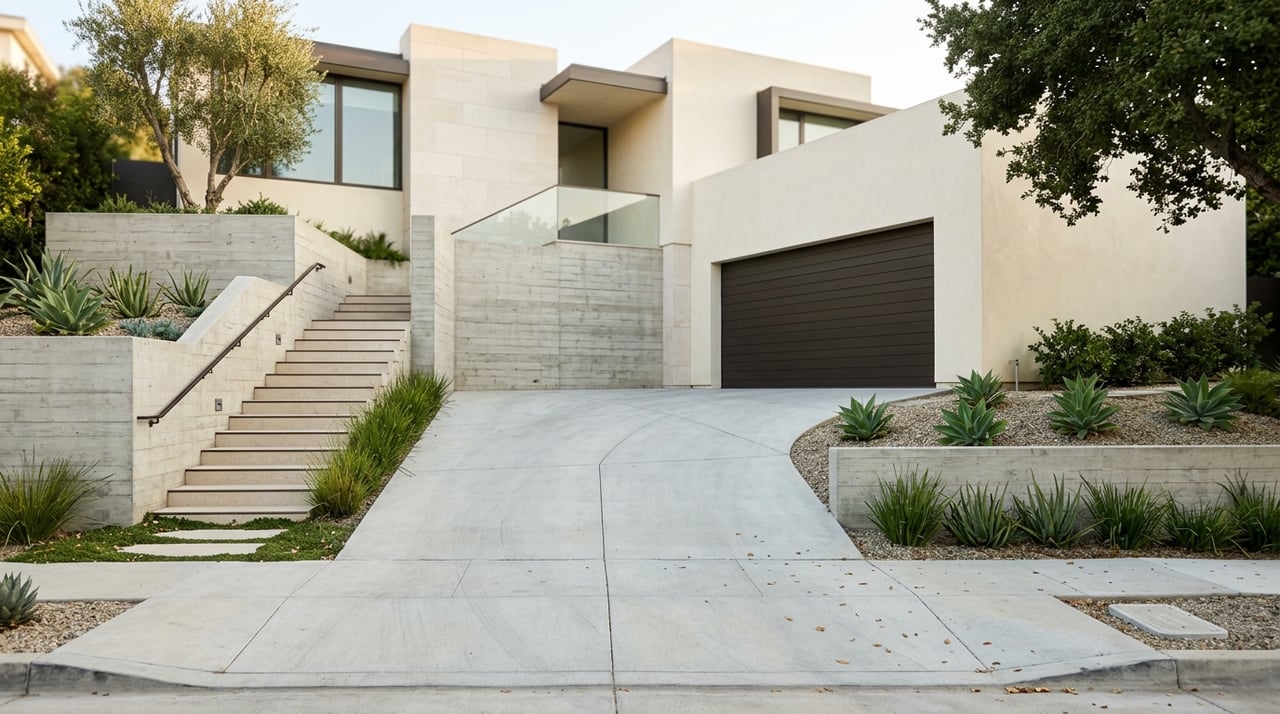
If you are drawn to Laguna Beach hillside homes, you are probably thinking about more than square footage. You are thinking about views, privacy, architecture, and the feeling of living above the coastline in one of Orange County’s most distinctive settings. The trade-off is that hillside living comes with a more complex ownership and due-diligence picture than many buyers expect. This guide walks you through the key issues, from access and views to wildfire and future remodel potential, so you can evaluate a property with clarity. Let’s dive in.
Why hillside homes feel different
Laguna Beach is shaped by steep cliffs, rolling hills, deep canyons, and a relatively small flat basin. That physical layout affects how homes are built, how lots function, and how neighborhoods connect to the rest of the city.
In hillside areas, development is often constrained by steep terrain, narrow streets, and dead ends. The city also treats some hillside land as part of a broader conservation-minded framework with limited low-density residential use, which helps explain why these homes often feel very different from properties in the central village or beach areas.
Expect a site-specific review
One of the most important things to know is that Laguna Beach does not regulate hillside homes as one simple category. The city has separate design frameworks for hillside development, residential design, and South Laguna, which means the rules and review process can vary depending on where a property sits.
For you as a buyer, that means two homes just a few blocks apart may differ in meaningful ways. Access, grading, views, parking, privacy, and future improvement potential can all be highly site-specific.
Access matters more than buyers expect
In hillside real estate, access is not just about convenience. It is also tied to safety, parking, daily usability, and future design options.
Laguna Beach requires safe vehicular access from a usable right-of-way of record to off-street parking. The city also regulates driveway design in hillside areas to reduce grading, runoff, erosion, and impacts on views and other sensitive areas.
Check the driveway in person
A listing may describe a home as having parking or easy access, but the real-world experience can feel very different on a steep lot. You should measure the driveway, backup space, and any turnaround area in person.
The city’s code includes specific geometry standards that show why this matters. Private access driveways must be at least 10 feet wide, common driveways serving two to four units must be at least 16 feet wide, and other driveways must be at least 20 feet wide.
Understand slope and circulation
Driveway grade is another practical issue. Laguna Beach limits average driveway grades to 10 percent for the first 20 feet off the street, 14 percent for the next 130 feet, and 12 percent after that.
Those standards help explain why some hillside homes are split-level, stair-heavy, or designed around narrow footprints. In neighborhoods with steep topography and constrained street systems, the daily rhythm of the home can feel very different from living on a flatter lot.
Parking can be part of the risk review
Parking is not only about guest convenience. In some hillside areas, it is directly tied to access and emergency circulation.
Laguna Beach enforces parking rules throughout the year, and on Red Flag Warning days the city restricts parking in Bluebird Canyon, Canyon Acres, and Diamond/Crestview. The city identifies these areas as access-impaired because of narrow and winding roadways, so curb conditions and street clearance should be part of your buying review.
Views are valuable, but not automatic
For many buyers, the view is the headline feature of a Laguna Beach hillside home. The city recognizes that both outward views and sunlight contribute significantly to quality of life, but a view should never be treated as a blanket neighborhood guarantee.
Laguna Beach’s view-preservation framework is based on specific view corridors and whether a view has been significantly obstructed. The city defines a view corridor as a line of sight toward a significant feature such as the ocean, canyon, or ridgeline.
A great view can be lot-by-lot
The practical takeaway is simple. A strong marketing view and a protected view are not always the same thing.
The city’s design guidance makes clear that neighboring development can change a property’s view experience over time. That is why view value in Laguna Beach is often street-by-street, and sometimes lot-by-lot.
Sunlight and privacy also shape livability
The best hillside homes balance view exposure with privacy and light. City design guidance looks at public and private views, lot orientation, configuration, access, and neighborhood character when reviewing projects.
The same guidance recommends framing views rather than blocking them, keeping a lower street-front profile where views are sensitive, and preserving side-yard view corridors where feasible. For you, this means the home’s position on the lot may matter just as much as the square footage inside it.
Remodeling can trigger deeper review
If you are buying with plans to remodel, expand, or add a second level, hillside due diligence becomes even more important. Laguna Beach requires permits for constructing, moving, altering, converting, improving, repairing, or demolishing a structure.
During plan review, city staff may identify the need for special studies. Depending on the property and scope of work, that can include geotechnical reports, hydrology review, and grading plans.
Geotechnical review is common on hillside lots
Laguna Beach requires a geotechnical report for most new construction and many substantial additions. That includes situations such as new second or upper floors, additions larger than 1,200 square feet, retaining walls over 5 feet high, shoring greater than 6 feet, sloped lots steeper than 1 vertical to 2 horizontal, and construction in steep hillside areas.
The city also uses independent peer review for geotechnical reports because of Laguna Beach’s history of landslides and other slope failures. If you see future upside in a hillside property, this is one of the most important areas to evaluate early.
Grading and drainage affect ownership
Steep lots are not just a design challenge. They also raise practical issues around grading, runoff, and long-term drainage management.
A grading permit is required for projects that disturb more than 20 cubic yards of soil, and work in a city street or right-of-way requires written authorization from the city engineer. The city also reviews hillside, oceanside, and multilevel properties for sewer standards and backwater-valve installation, which shows how drainage can affect both renovation planning and everyday ownership.
Wildfire should be part of your purchase review
Wildfire is one of the defining considerations for Laguna Beach hillside ownership. The city states that roughly 85 percent of Laguna Beach is in the Very High Fire Hazard Severity Zone, and it has adopted updated local-responsibility-area maps.
That makes wildfire diligence essential, especially if you are comparing multiple hillside locations and trying to understand the real difference between properties that may look similar online.
Know the defensible space requirements
In the Very High Fire Hazard Severity Zone, defensible space is a maintenance obligation under state law. Laguna Beach describes a 100-foot defensible space area in three bands: Zone 0 from zero to five feet, Zone 1 from five to 30 feet, and Zone 2 from 30 to 100 feet.
If vegetation changes are needed after an inspection, the city may require updated landscape review through Administrative Design Review. In other words, landscaping choices on a hillside lot can affect both safety and approvals.
AB-38 may apply
The city notes that AB-38 disclosure inspections apply to one- to four-unit properties in the zone. You should confirm whether the property falls within the mapped fire hazard area and whether any inspection or compliance steps will apply as part of your transaction planning.
Neighborhood variation is real
Laguna Beach hillside homes are not a single product type. The city’s own planning documents describe meaningful differences between hillside neighborhoods and subareas.
For example, Arch Beach Heights is described as having narrow lots, steep topography, and a constrained street system, with standards focused on density, privacy, parking, and safety. Diamond/Crestview is described as having steep and varied topography, ridgelines, rock outcrops, sensitive geologic and biological areas, lot configuration constraints, and a constrained street system.
Street-by-street analysis wins
This is why broad assumptions can be costly. A home’s slope, lot shape, street width, parking pattern, and view orientation can materially affect day-to-day use and future flexibility.
For luxury buyers especially, that means the right advisory process is not just about finding a beautiful home. It is about understanding how the property functions today and what constraints or advantages may shape it tomorrow.
A smart hillside buyer checklist
Before you move forward on a Laguna Beach hillside home, focus on the issues that most often affect long-term satisfaction and future value:
- Verify the property’s actual view status, not just the marketing description.
- Visit the home in person to assess driveway width, grade, backup space, and turnaround usability.
- Confirm whether any street or parking restrictions apply, especially during Red Flag Warning conditions.
- Check whether the property is in the Very High Fire Hazard Severity Zone.
- Review whether AB-38, defensible space, or landscape-related steps may apply.
- If you may remodel or expand, ask early about potential geotechnical, grading, hydrology, and drainage review.
- Evaluate the lot’s slope and geometry, not just lot size, since these often drive what is realistically possible.
Laguna Beach hillside homes can offer exceptional views, privacy, and architectural presence, but they reward careful analysis. When you understand access, slope, wildfire exposure, and future improvement pathways before you buy, you are in a much stronger position to choose a property that truly fits your goals.
For buyers seeking discreet guidance on Laguna Beach hillside properties and coastal Orange County luxury homes, the Daftarian Group offers private, concierge-level representation shaped by local market expertise.
FAQs
What should you check first when buying a Laguna Beach hillside home?
- Start with access, driveway usability, parking, slope, and wildfire-zone status, since these issues can affect daily living, safety, and future plans.
How are Laguna Beach hillside views protected?
- Laguna Beach uses a view-preservation framework based on site-specific view corridors and whether a view has been significantly obstructed, so protection is not automatic for every property.
Can you remodel a Laguna Beach hillside home easily?
- Remodeling may require permits and can trigger geotechnical, grading, hydrology, or drainage review depending on the site and the scope of work.
Why do some Laguna Beach hillside homes feel more complex than beach-area homes?
- Hillside homes are often shaped by steep terrain, narrow streets, dead ends, constrained lot geometry, and site-specific design review, which can make them function very differently from homes in flatter areas.
Are wildfire rules important for Laguna Beach hillside buyers?
- Yes. Much of Laguna Beach is in the Very High Fire Hazard Severity Zone, and buyers should review defensible space requirements, possible AB-38 inspections, and access conditions carefully.