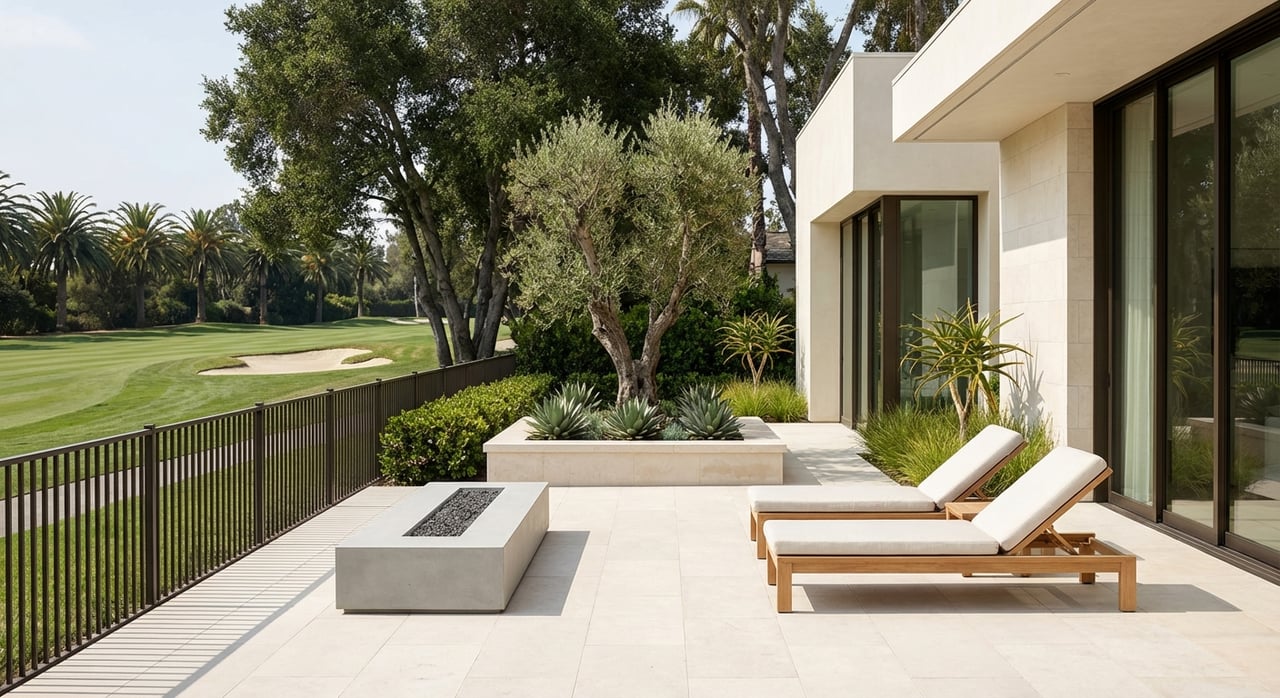
If you are drawn to the rhythm of a private fairway and the calm of canyon views, you have likely wondered how much that lifestyle is already priced into Shady Canyon homes. The answer is not one number. In Shady Canyon, course proximity, membership realities, and dramatic topography all interact to shape value. In this guide, you will see how each factor moves price, what ranges the appraisal literature supports, and how to budget the carrying costs that influence buyer demand. Let’s dive in.
Why Shady Canyon commands a premium
Shady Canyon is a gated, custom‑estate community in southern Irvine with an ultra‑luxury profile and a private golf club at its center. Public market trackers show very high median values, though their methodologies differ. One vendor recently showed a median sale price above eight figures, while another index placed the typical home value in the high single digits (millions). Because very few homes trade in any given month, a single notable sale can move short‑term medians. That low‑turnover dynamic is normal for custom enclaves and is one reason careful, parcel‑level valuation matters here.
Beyond scarcity, three structural features support pricing: the private course and club amenity, large custom lots and homes, and canyon landforms that create prized views. Each can add a measurable premium compared with otherwise similar properties.
The golf lifestyle value drivers
Visual, functional, and social benefits
A home that fronts a private course offers more than a pretty backdrop. You get a visual amenity (golf and open space views), a functional amenity (close access to practice areas and the clubhouse), and a social amenity (member events, dining, and a like‑minded community). Published appraisal and academic work finds that golf adjacency and premium views are associated with higher prices, though the size of the premium varies by market and view quality. A review of studies shows statistically significant uplifts across many datasets, from modest to substantial depending on setting and measurement approach. You can explore the evidence in this summary of golf membership and residential pricing effects from published appraisal literature.
Membership economics and the buyer pool
Membership at Shady Canyon Golf Club is commonly described as invitation or application based. Publicly reported figures cited by club‑tracking resources place a full golf initiation around $150,000 with dues near $14,000 per year. Social memberships are often reported around $10,000 to start with roughly $5,700 per year in dues. These are separate from HOA dues and property taxes, so they influence the all‑in cost of ownership and the universe of buyers who will participate at a given list price. For a quick reference on typical initiation and dues levels, see the Shady Canyon Golf Club summary on a private‑club directory. Always confirm current figures directly with the club.
How much is a view worth here?
No single percentage applies to every parcel. That said, peer‑reviewed and appraisal sources report common ranges. Many studies find premiums in the low single digits for basic adjacency and into the teens or around one quarter for stronger, fairway‑level or panoramic views. Some niche datasets show even larger premiums for prime lots. The key is to treat these as ranges and confirm with local paired sales. A helpful overview of measured uplift ranges is available in this appraisal literature review on golf memberships and price effects.
How appraisers classify view quality
Because view is not binary, appraisers often use a graded system: none, partial, fairway, and prime. A parcel’s category is informed by both field observation and tools like GIS viewshed analysis that estimate how much open space is visible from the site. That method creates a reproducible yardstick to compare homes, which is helpful in a small‑sample market like Shady Canyon. For a plain‑English explanation of view attributes and measurement, this overview of current appraisal practice on views and quantification is useful.
Canyon landform and orientation premiums
Shady Canyon’s setting matters as much as the course. Lots on ridgelines can capture long canyon, mountain, and course vistas. Canyon‑floor lots may feel more enclosed, with different privacy and daylight patterns. Orientation shapes how the sun moves through indoor and outdoor spaces, which affects day‑to‑day livability and, for some buyers, perceived value. You can see how the community sits within protected open space by exploring the city’s resources for Bommer Canyon and the Irvine Ranch network, such as the City of Irvine’s Bommer Canyon page.
When evaluating a specific property, walk the site at different times of day to test view angles, glare, and privacy. Photos can flatter or compress a view. Your own experience on site is the best filter before setting a price or writing an offer.
Scarcity, days on market, and pricing strategy
Shady Canyon has a limited number of custom estates and very few sales each year. That scarcity pushes values higher over time but also increases volatility in short windows. Expect longer marketing periods for some listings and sensitivity to pricing, presentation, and view strength. A smart strategy in this micro‑market is to price within a range, then reconcile to the handful of most relevant comps.
If you are selling, build a comp set inside Shady Canyon that isolates your key differences: fairway frontage versus interior, ridge versus canyon floor, lot size, and level of recent renovation. If your view is above average, consider a conservative, expected, and stretch price tied to documented view premiums and local matched pairs. If you are buying, weigh any golf or panoramic view uplift against the home’s age, layout, and upgrade level so you do not over‑index on outlook alone.
The carrying‑cost lens
HOA dues in Shady Canyon are property‑specific, but sample MLS data for large estates often shows monthly association fees in the $700 to $900 range. Add club dues if you plan to join, and the annual total can be meaningful. A simple illustrative budget looks like this: HOA $800 per month (about $9,600 a year) plus full golf dues near $14,000 a year equals roughly $23,600 in recurring obligations, before taxes and insurance. That number does not include an initiation payment for membership. For a snapshot of the community association structure and public contact information, see the Shady Canyon Community Association profile. Always verify the exact HOA dues and any assessments for the specific parcel you are considering.
Risk and resiliency considerations
One reason the market prices a private‑course setting is because the open space feels protected. Still, club and course operations matter to long‑term value. Appraisal case studies show that course closures or significant reductions in maintenance can harm nearby values. While this is not a forecast for Shady Canyon, it is a reminder to review governance and stewardship in any golf community. For context, see a local case discussion of course ownership and community impacts.
Membership structure also matters. In some communities, memberships are appurtenant to the property and transfer with the deed. In others, they are optional and may not be transferable. Public descriptions of Shady Canyon membership emphasize invitation or application rather than a deeded tie to every parcel. That suggests you should confirm the current policy and any transferability directly with the club’s membership office. Start with the Shady Canyon Golf Club site. For valuation context on why appurtenant versus non‑appurtenant memberships are treated differently, see the published appraisal literature summary.
Buyer and seller checklists
For buyers
- Verify membership details with the club: categories, initiation, dues, and whether memberships can transfer with a sale. Begin with the club’s official site.
- Build a full carrying‑cost picture: HOA, estimated club dues, property taxes, insurance, and utilities. Use the association profile for structure and your agent’s MLS packet for parcel‑specific dues.
- Validate the view: review photos, ask for a drone video, and conduct site visits at multiple times of day. See this overview of how appraisers measure and grade view quality.
- If a lot is sloped or hillside, ask for geotechnical and drainage reports. Retaining walls, grading, and engineering can add costs or timelines. A federal training text on earth retaining structures is a good primer on hillside engineering considerations.
For sellers
- Document your view advantage: professional photos, drone imagery, and, if available, a simple view classification that a buyer’s appraiser can reference.
- Price within a supported range: use matched pairs inside Shady Canyon and apply conservative, expected, and stretch adjustments for view and course adjacency. Anchor your narrative with published view‑premium ranges from appraisal literature.
- Prepare a transparent carrying‑cost sheet: monthly HOA, any sub‑association fees, and the most recent club dues schedule if relevant to your target buyer. Confirm all figures before publishing them.
What this means for you
In Shady Canyon, the golf lifestyle is not a soft idea. It is a set of tangible attributes that the market prices: course views, club access, and the drama of canyon landforms. The uplift can be modest or very large depending on view quality, membership realities, and the handful of comps that truly match your home. If you are buying, test the view and total carrying cost before you stretch. If you are selling, present verified view strength, be precise about membership context, and price within a reasoned range.
If you want a private, data‑driven plan for a specific Shady Canyon property, connect with the Daftarian Group. Our team brings discreet, white‑glove guidance and a sharp valuation process tailored to ultra‑luxury micro‑markets.
FAQs
How do Shady Canyon golf views typically affect prices?
- Appraisal studies show premiums from about 5 percent up to around 30 percent for stronger fairway or panoramic views, with outliers higher. Use local paired sales to set a precise adjustment.
What does it cost to join Shady Canyon Golf Club, and is it required?
- Publicly reported figures often cite about $150,000 for full initiation and roughly $14,000 per year in dues; social options are lower. Membership is by invitation or application and is not required to live in the community. Confirm current terms with the club.
How should I budget monthly ownership costs in Shady Canyon?
- Many large estates show HOA dues around $700 to $900 per month. If you plan to join the club, add annual dues to that number, plus property taxes and insurance, to get your true carrying cost.
Are memberships appurtenant to Shady Canyon properties?
- Public descriptions emphasize invitation or application rather than deeded tie‑ins. That points to non‑appurtenant policies, but you should verify transferability and terms with the membership office.
How can I confirm a home’s view quality before I offer?
- Combine site visits at different times of day with a simple view classification and, when available, GIS viewshed analysis. Appraisal resources outline this approach clearly.
What timeline should I expect to sell a Shady Canyon estate?
- Expect longer marketing periods than typical suburban tracts because the market is small and sales are infrequent. Strong presentation, clear view documentation, and disciplined pricing improve outcomes.